Crack Sealing for Exterior Slabs and Pavement: The Complete Guide
Last updated: October 21, 2026
Quick Answer: crack sealing for exterior slabs and pavement is usually the right first repair for stable, non-structural cracks, because it keeps water out, slows further damage, and buys time before a bigger fix is needed. The job is not cosmetic filler. It works best on cracks that are stable enough to seal, not on slabs that are moving, sinking, or breaking apart.
Crack Sealing for Exterior Slabs and Pavement — The Complete Guide is written here from the standpoint of a specification-minded editor, not a hands-on contractor. That matters because the wrong crack product can trap water, peel out in one season, or make a crack harder to inspect later. For readers comparing options, this guide focuses on crack sealing for exterior slabs and pavement rather than on general patching.
Key takeaways
- Crack sealing is for keeping water out of a crack, not for making a slab look new.
- Hot-pour asphalt sealant and cold-applied polyurethane are the two most common choices, but they solve different problems.
- Small, clean, mostly stable cracks are often the best candidates; lifting, differential settlement, and wide vertical offset usually need a different repair.
- Surface prep matters as much as the material. A poor bond fails fast, even with a good product.
- Backer rod, reservoir shape, and the right sealant depth matter more than most homeowners expect.
- If you can see active movement, spalling along the edges, or one side rising and falling seasonally, sealing alone is usually the wrong fix.
What crack sealing actually does, and when it is the wrong fix
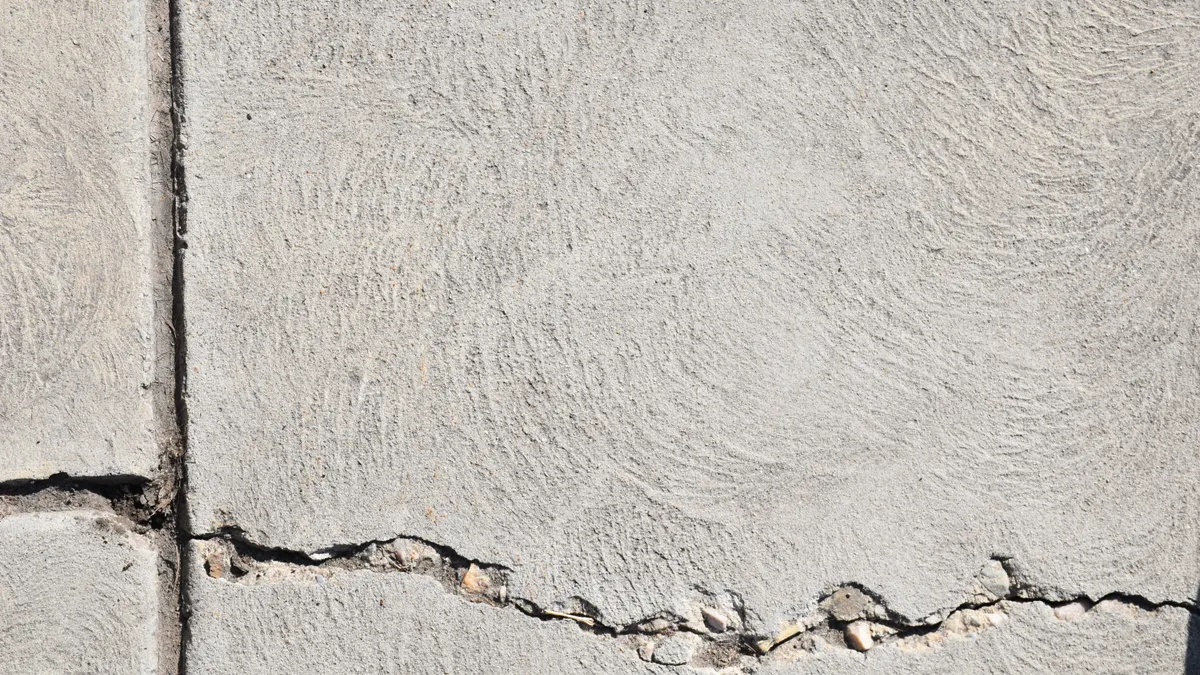
Crack sealing is a moisture-control repair, not a structural cure. It works by filling or bridging a crack so rainwater, meltwater, and deicing salts cannot keep entering the slab or pavement base. That matters because water is often the real enemy: it washes fines out of the base, softens supporting layers, and helps freeze-thaw damage widen the break.
This is a good repair for fine-to-moderate cracks that are not actively opening and closing much, especially in concrete driveways, sidewalks, patios, warehouse slabs, and asphalt parking lots. It is also useful for stopping debris intrusion in saw cuts and construction joints, provided the joint is still functioning as a joint and not as a broken edge.
It is the wrong repair when the slab has a vertical step you can feel with a shoe, when panels are rocking, or when the crack is a symptom of a larger failure. In those cases, sealant may hide the problem for a while but will not stabilize it. A settling slab usually needs slab jacking, replacement, or drainage correction. An asphalt crack with alligator cracking around it usually needs patching or resurfacing, not just a bead of sealant.
The best guide to crack sealing is usually this: seal cracks that are still one crack, not many failures in one place. The distinction often saves money because you do not over-treat a slab that needs a different repair path, but consult a professional or local specification if the movement or extent is unclear.
How do I know if a crack is sealable?
A crack is sealable if it is mostly cleanable, reasonably dry, and not showing major vertical movement. That is the short answer, and it is the one that saves the most wasted effort.
The practical test starts with the crack itself. Hairline cracks, moderate straight cracks, and open but stable cracks are good candidates. A crack that has clean edges and no crumbling is also a better candidate than one with friable concrete or soft asphalt around it. If a screwdriver or putty knife easily breaks the edges away, the substrate is already failing and the sealant will have little to grip.
Movement matters just as much as width. A crack that opens and closes with temperature changes can still be sealable, but it needs the right joint design and a flexible sealant. A crack with repeated vertical displacement is different. Sealant is not meant to bridge a step where one side sits higher than the other by a visible amount. In pavement language, that is a structural or support issue, not a sealing issue.
Moisture also matters. Polyurethane and polysulfide sealants need a dry, prepared substrate for bond. Hot-pour asphalt products tolerate some field conditions better, which is one reason they are common on road and parking-lot work, but even they fail if dirt, dust, or old loose sealant remains in the crack. The standard advice from most manufacturer data sheets is to clean the crack aggressively, often by routing, blowing, and sometimes heating or priming, depending on the system.
A simple rule is this: if the crack edges are sound and the slab is fundamentally stable, seal it. If the edges are breaking, the surface is moving, or the damage spreads like a map of connected fractures, stop treating it as a sealing job and consult a professional before proceeding.
Hot-pour asphalt sealant or polyurethane sealant?
Hot-pour asphalt sealant wins for long pavement runs, while polyurethane wins for cleaner concrete repairs and homeowner-scale work. That is the honest version, and it depends on whether the surface is asphalt or concrete, how much movement you expect, and what tools you can realistically use.
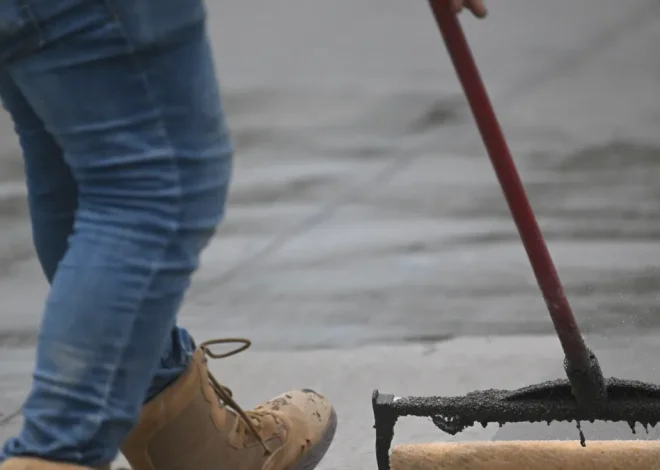
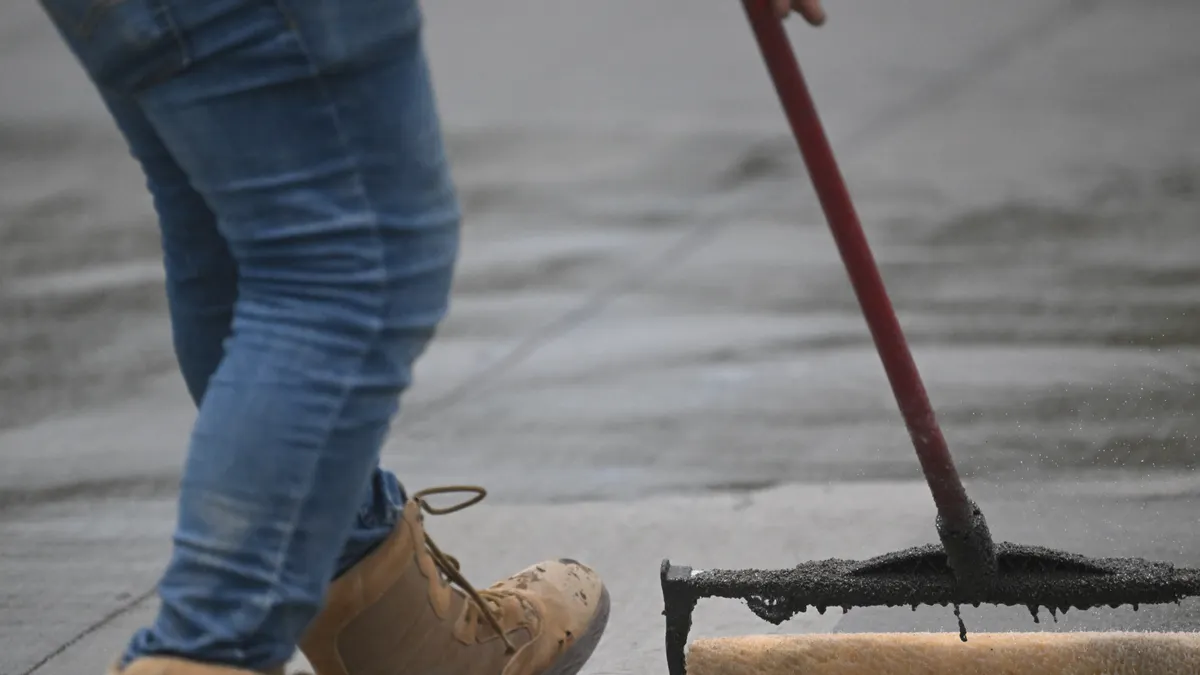
Hot-pour sealant is the classic pavement choice for asphalt cracks and larger maintenance jobs. It is heated in a melter and poured into the crack or routed reservoir. On roads, lots, and asphalt drive lanes, that method is fast and durable when done correctly. The biggest strength is elasticity: the material can flex with seasonal expansion and contraction. The weakness is setup. Hot-applied work needs equipment, temperature control, and good safety habits. It is not friendly to small one-off repairs, and a homeowner without the right gear should not improvise.
Polyurethane sealant is the more practical choice for many concrete slabs, sidewalks, patios, and some exterior joints where the product is listed for that substrate. It is easier to place precisely and is often sold in cartridges or pails. Good polyurethane products are designed to remain flexible and bond to concrete, masonry, or asphalt when the crack is prepped correctly. The downside is that the repair is only as good as the prep and depth control. If the crack is dusty, damp, or too shallow, the sealant can debond or tear.
A third category is silicone or hybrid sealants used around joints and exterior transitions. These are useful in some slab-joint situations, but they are not the default answer for pavement cracks. They belong in specific details, not as a universal cure, and a professional should confirm the product matches the joint movement and substrate.
For most readers, the decision comes down to this: hot-pour is the better pavement-system solution, polyurethane is the better small-project solution, and neither is right if the slab itself is failing. If a product label does not clearly state the substrate and joint type it is intended for, do not assume it fits.
| Criteria | Hot-pour asphalt sealant | Polyurethane sealant | Winner for this condition |
|---|---|---|---|
| Best substrate | Asphalt pavement | Concrete and mixed exterior joints | Asphalt: hot-pour; concrete: polyurethane |
| Equipment required | Melter/boiler and applicator | Caulk gun or pourable pail | Small repairs: polyurethane |
| Typical project scale | Long crack runs, parking lots, drive lanes | Single cracks, patios, sidewalks, small slabs | Small jobs: polyurethane; larger pavement runs: hot-pour |
| Speed of application | Fast once equipment is on site | Slower per linear foot | Large-area productivity: hot-pour |
| Movement tolerance | Good flexibility when correctly installed | Good flexibility, product-dependent | Tie, depending on product data sheet |
| Weather sensitivity | Less forgiving during placement, especially heat and cleanliness | More sensitive to substrate dryness and cure conditions | Field crews with equipment: hot-pour |
| DIY accessibility | Poor | Better | DIY: polyurethane |
| Removal and redo | More labor-intensive | Usually easier to cut out and replace | Future maintenance: polyurethane |
| Main failure mode | Poor adhesion from contamination or bad heating | Bond loss from moisture, dust, or poor joint geometry | Neither if the crack is badly contaminated |
Hot-pour sealant: where it wins and where it fails
Hot-pour sealant wins on asphalt pavements that need durable, repeatable maintenance over long runs. On a parking lot, private road, or service drive, the system is built for that environment. The material is heated and placed hot so it can flow into irregularities, bond well when the crack is prepared correctly, and remain flexible after cooling. On properly prepared asphalt, that flexibility is the main reason it remains a standard in pavement maintenance.
Its strength is not just the material; it is the system. Contractors can route cracks, clean them, and fill them in a way that creates a consistent repair line. That matters because narrow cracks in asphalt often lengthen and branch. A controlled reservoir gives the sealant a better shape than a thin smear sitting on top.
The trade-off is that hot-pour is not casual work. It requires specialized equipment, safe handling of high temperatures, and careful control of application conditions. Poor heating can scorch material or reduce performance. Poor cleaning leaves dust and fines that break the bond. On a driveway with only a few cracks, that setup is overkill. On a bigger asphalt surface, it is the more professional choice.
Hot-pour is also less attractive where the base is unstable. If the asphalt is depressed, shoving, or breaking into a network of connected cracks, sealing only the visible lines leaves the real problem untouched. In those cases, a patch or surface rehabilitation is usually the better use of money.
This option is for the reader who has asphalt, several linear cracks, and a maintenance mindset. It is not for someone with a single concrete patio crack, and it is not for a slab that has already lost support.
Polyurethane sealant: where it wins and where it fails
Polyurethane sealant wins on smaller concrete slab repairs because it is easier to place, easier to buy, and easier to control around a homeowner-sized project. It comes in products formulated for concrete joints and cracks, and many are intended to stay flexible across seasonal movement. That makes it a practical fit for patios, walkways, garage slabs, and some exterior joints where water intrusion is the main concern.
The strength of polyurethane is precision. A cartridge gun, backer rod, and clean joint geometry are enough for many jobs. That means a careful homeowner or maintenance person can get a usable repair without moving a melter trailer onto the site. The material also makes sense where appearance matters, because it can be tooled more neatly than a rough hot-pour repair.
Its weakness is that it is less forgiving than many people think. Polyurethane does not fix a dirty crack. It does not like standing moisture in the joint. It does not perform well if the sealant depth is wrong or if the crack is too wide for the product without a backer rod. If the sealant bottoms out or bonds on three sides instead of two, it can tear when the slab moves. That is why joint detail matters so much in concrete work.
Polyurethane also has limits in cold-weather timing and cure behavior. Product literature commonly specifies temperature ranges and cure windows, and those conditions matter more than a casual reading of the label suggests. A repair installed too early in damp conditions may seem fine at first and then fail after the first real freeze-thaw cycle.
This is the better choice for someone who needs targeted control, not industrial throughput. It is not the best answer for heavily trafficked asphalt or for broad pavement maintenance where equipment and speed matter more than neatness.
The prep work that decides whether the repair lasts
Surface preparation decides whether crack sealing works at all, and it is the part people most often underdo. The sealant may be premium, but if the crack still holds dust, loose particles, or moisture, the bond is already compromised.
The usual sequence is straightforward: open or route the crack if needed, remove all loose material, dry the area if the product requires it, place backer rod where the geometry calls for it, and then install the sealant to the correct depth. That sounds simple because it is simple in concept, but each step has a reason.
Routing gives the sealant a better shape and more bonding area. Cleaning removes the powder that otherwise becomes a weak layer under the sealant. Drying matters because many sealants bond poorly to damp concrete. Backer rod prevents the sealant from bonding to the bottom of the joint and helps control depth. A joint that is too deep wastes sealant; a joint that is too shallow gives the sealant too little body to move with the slab.
Edge condition matters too. If the crack edges are spalled, they often need repair before sealing. Otherwise the sealant is trying to bond to crumbly material instead of sound substrate. That is one of the biggest omissions in generic advice: a crack is not just a line. It is a small failure zone with its own surface condition, width, depth, and movement pattern.
If the surface prep takes ten minutes and the manufacturer data sheet expects a cleaner, drier, or properly profiled surface, the job is not ready. The repair may still look filled, but it will not be dependable.
What size crack can be sealed, and when a slab needs something else?
A crack can be sealed when it is stable enough to accept a flexible material and when its edges still hold together. That is the practical threshold. Width alone does not decide the answer; movement and edge condition matter more.
Fine cracks are easy to seal, but very hairline cracks may not hold much material unless they are opened slightly or treated with a penetrating system. Moderate cracks are usually the sweet spot because they are large enough to clean and fill yet not so wide that the slab is clearly separated. Wider cracks can sometimes be sealed if the product is designed for that movement and if the joint is properly shaped with backer rod.
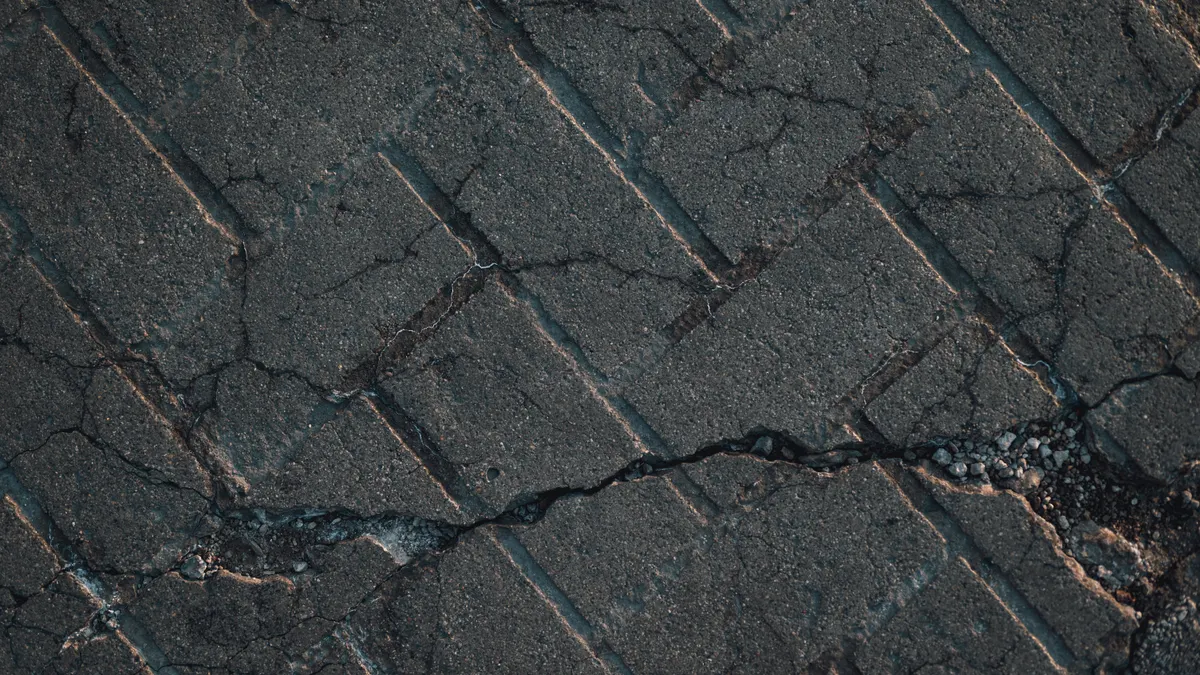
The point where sealing stops making sense is usually the point where the slab has a different problem. A crack with one side higher than the other indicates support loss. A crack that keeps widening despite previous repair suggests ongoing movement. A crack surrounded by a spiderweb pattern of smaller fractures often points to shrinkage, overload, or freeze-thaw deterioration. In those cases, sealant becomes a cosmetic bandage.
There is also a drainage angle. If water flows toward the crack because the slab slopes poorly, sealing may still help, but only if the larger water source is addressed. Otherwise the crack becomes a recurring wet line and the repair is fighting the site conditions every week of the year.
The right mental model is this: seal cracks that are pathways for water. Rebuild or replace surfaces that have become broken systems.
The honest side-by-side: what a generic guide leaves out
The generic guide usually says “seal the crack” and leaves out the part that actually determines success: the slab type, the crack behavior, and the repair geometry. Those three things change the answer.
Concrete and asphalt are not interchangeable. Concrete cracks often need cleaner joint geometry, backer rod, and a sealant chosen for that substrate. Asphalt cracks often respond better to hot-pour methods, especially in larger maintenance areas. A product that looks similar in the bucket may still be wrong for the surface.
Movement is the second missing piece. Some cracks are static. Some move seasonally. Some are symptoms of support failure. A sealant that works fine on a stable patio joint can fail quickly in a drive lane that sees thermal cycling and vehicle loading.
Repair geometry is the third. A sealant laid flat on a dirty crack is not the same as one placed into a routed reservoir at the right depth. The latter is a system; the former is a patch. That difference often decides whether the repair lasts months or years.
Here is the decision that matters most: if the crack is stable and the substrate matches the product, sealing is the right move. If the crack is moving too much, the slab is shifting, or the edges are failing, do not force a sealant to do structural work.
Which repair should you choose?
Choose hot-pour asphalt sealant if the surface is asphalt, the cracks run long, and the goal is professional-grade pavement maintenance with proper equipment. Choose polyurethane sealant if the surface is concrete, the repair area is smaller, and you need a flexible product you can place with simple tools. Neither if the slab has major vertical displacement, active heaving, or widespread cracking that points to base failure.
The best choice depends on substrate, scale, and movement. For a parking lot or long asphalt drive, hot-pour is the better system because it is built for throughput and pavement behavior. For a patio, walkway, or garage slab, polyurethane is usually the smarter choice because it is easier to control and more practical at small scale. If the crack is really a symptom of a deeper problem, stop treating it as a sealing job and address the movement, drainage, or support issue first.
That is the clean answer. Seal what can be sealed, and do not ask sealant to repair a failing slab.
When should you skip crack sealing entirely?
Skip crack sealing when the damage is already beyond a moisture-control repair. That includes slabs that have settled, lifted, or rotated; cracks with severe spalling; and surfaces with widespread interconnected cracking.
A sunken driveway panel, a patio slab that has dropped at one corner, or an asphalt section that has failed into alligator cracking needs a different repair class. The same is true for cracks that keep growing because the base is soft or eroded. If the site drainage is pushing water through the subgrade, sealing the visible crack only delays the next failure.
There is a second case people miss: when appearance is the only goal. If the crack is stable, narrow, and dry, sealing can help preserve the slab. But if the reader wants a perfectly invisible result, crack sealing is the wrong expectation. Even well-done work remains a repair line. It improves performance first and appearance second.
This is also the moment to involve a pavement contractor, concrete repair specialist, or structural engineer, depending on the symptom. That is not overkill when the slab itself is moving. A repair product cannot solve settlement or structural distress, and pretending otherwise usually makes the eventual fix more expensive.
FAQ
Can I seal cracks in concrete and asphalt with the same product?
No, not reliably. Some sealants are formulated for both substrates, but many are not, and the product data sheet controls the answer. Concrete often needs a different bond profile and joint treatment than asphalt, especially if the crack is a working joint.
Do I need to rout the crack first?
Often, yes. Routing creates a reservoir that improves bond and gives the sealant the right shape to move with the slab. It is especially useful on concrete joints and on cracks that have ragged edges or shallow width.
Is crack sealing permanent?
No. It is a maintenance repair, not a forever fix. Good prep and the right material can extend service life, but movement, water, UV exposure, and traffic all work against the seal over time.
Can I seal a wet crack?
Usually not with standard polyurethane or similar sealants. Some products tolerate damp conditions better than others, but the safest approach is to follow the manufacturer’s substrate-moisture requirements and dry the area if the instructions call for it. If conditions are uncertain, consult a professional or the product data sheet before installation.
Authoritative sources worth checking before you buy a product
The National Asphalt Pavement Association discusses pavement maintenance practices and crack sealing guidance on its technical resources pages, and manufacturers’ product data sheets often spell out routing, cleaning, and temperature requirements that matter more than marketing copy.
For concrete joint design and sealant selection, the Portland Cement Association and ASTM standards are the most useful references to look for. ASTM C920 is the familiar classification for elastomeric joint sealants, and product data sheets commonly reference it when the sealant is intended for dynamic joints.
If the work involves a road, lot, sidewalk, or public right-of-way, local specifications may also control the accepted repair method. That is worth checking before buying material, because the “right” sealant in the abstract can still be the wrong one for the site.
Drafted with AI; not yet reviewed by a person.

Related Posts
How to Seal Cracks in a Garage Floor Without Tracking Dirt
How to Seal Control Joints in a Concrete Driveway