Self-Leveling vs Non-Sag Sealants: Which One Fits Your Crack?
Last updated: September 10, 2026
Key Takeaways
- For a homeowner in the outer boroughs, a simple joint job may be scheduled in 1 to 3 hours.
- A small crack-sealing job may take 1 to 3 hours, but prep, drying time, and access can turn it into a same-day or next-day project.
- Self-leveling sealant fits a horizontal crack or joint that can hold liquid long enough to flow flat.
- Self-leveling sealant flows to a flat finish; non-sag sealant stays where you put it.
Table of Contents
- Self-Leveling vs Non-Sag Sealants: Which One Fits Your Crack?
- Key Takeaways
- Self-Leveling vs Non-Sag Sealants: What’s the real difference?
- Which one fits your crack?
- What does sealing a crack cost in NYC?
- How does New York’s weather change the choice?
- How to vet a crack-sealing contractor in New York City
- Red flags: quotes and product picks that should worry you
- When should you seal a crack in NYC?
- Frequently asked questions
- My bottom-line recommendation
One choice, two very different outcomes. Self-leveling sealant fits a horizontal crack or joint that can hold liquid long enough to flow flat. Non-sag sealant belongs on a vertical or overhead crack, where gravity would drag a thinner material downward. In New York City, that split matters more than people think. Concrete slabs, garage floors, basement slabs, and exterior façades all fail differently after freeze-thaw cycles and hard summer heat.
I wrote this for a homeowner, property manager, or super choosing a material before calling a contractor or buying tubes and caulk guns. Pick wrong, and the failure usually announces itself. Loudly. It sags, skins over too fast, leaves a void, or gets torn out the next season. For a quick overview of joint-sealant types, see the NYC Department of Buildings and ASTM C920 standard context.
Self-Leveling vs Non-Sag Sealants: What’s the real difference?
Self-leveling sealant flows to a flat finish; non-sag sealant stays where you put it. That single distinction changes where each one belongs, how it looks, and how long it lasts.
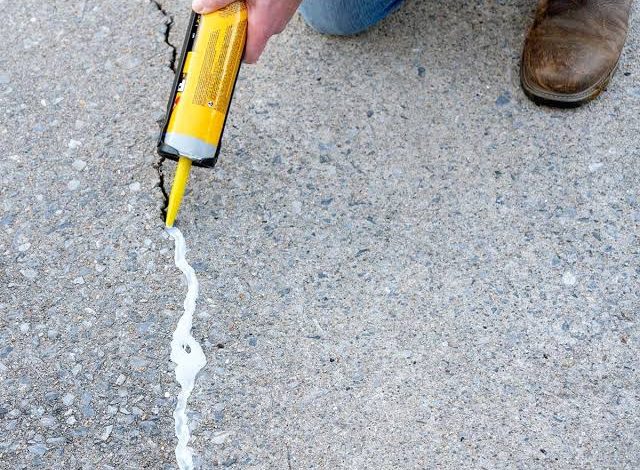
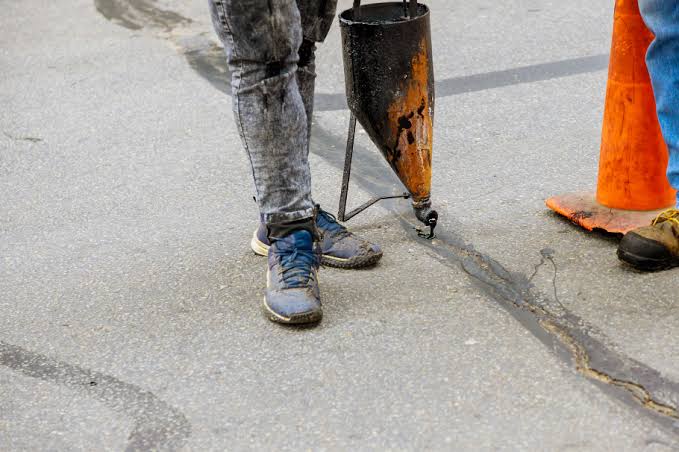
Horizontal joints are the natural home for self-leveling products. Think concrete control joints, expansion joints, and slab cracks that are mostly level. They spread on their own, so there is less tooling. A garage floor or driveway in Brooklyn or Queens is a typical case, assuming the edges are sound and the crack is dry.
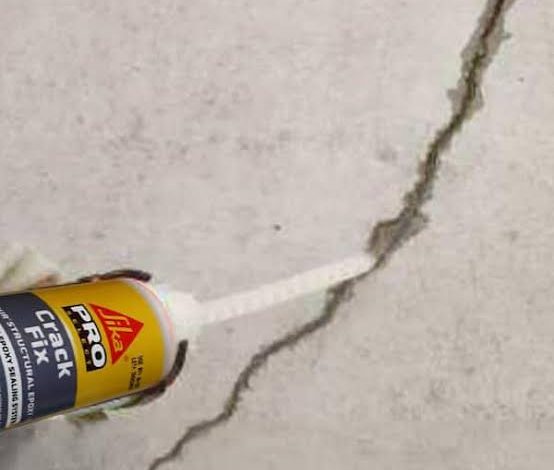
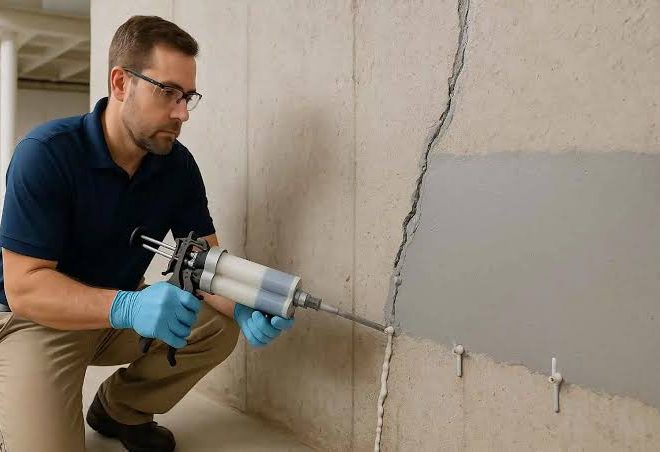
Non-sag products are thicker. They are built to hang on a vertical joint, an overhead seam, or a wall crack where a runny material would slump. Sealing a masonry wall in a Harlem brownstone, a parapet, a precast façade, or a basement wall crack? Non-sag is usually the safer bet.
And here is the part generic advice skips: “crack” by itself tells you almost nothing. Orientation, width, depth, movement, and substrate all matter. A 1/4-inch horizontal joint on a sidewalk slab is not the same job as a 1/4-inch vertical masonry crack above a lintel. Honestly, that’s the hinge point. In practice, those details decide whether you want a self-leveling polyurethane, a non-sag polyurethane, a silicone, or a hybrid sealant that matches the movement expected under ASTM C920, the standard most people use as a baseline for elastomeric joint sealants.
Which one fits your crack?
Horizontal, clean, and wide enough to hold a flowing material without it escaping — that is the self-leveling lane. Vertical, sloped, overhead, or too irregular for a liquid product to stay put? That points to non-sag.
If the crack is in a driveway in Staten Island, a garage slab in Long Island City, a warehouse floor in Red Hook, or a sidewalk panel in Astoria, self-leveling is usually the first material I would look at. It is especially useful for joints that move a little through the season but are not actively shifting apart. Short version: it can keep up.
Walls are different. If the crack is in a foundation wall, a stucco façade, a brick mortar joint, a retaining wall, or a window perimeter on the Upper West Side, non-sag is usually the better match. You want a bead that bridges the gap without running down the face before it cures. Still, for exterior work, check the manufacturer’s instructions or talk to a professional if the surface, slope, or weather makes the job tricky.
Not every horizontal crack should get a self-leveling product, though. If the crack is deep, active, wet, contaminated with old asphaltic material, or not actually a joint, sealant may be the wrong fix. Then you may need backer rod, epoxy repair, routing and sealing, or a structural repair approach instead of a simple caulk line. That comes up a lot in older Manhattan and Bronx buildings, where patched concrete and mixed substrates are common.
My rule is simple: choose by gravity first. Then movement. Then appearance.
What does sealing a crack cost in NYC?
In New York City, small crack-sealing jobs often land in the low hundreds, while larger joint-sealing or façade work can move into the high hundreds or more, depending on access, surface prep, and linear footage. For a sense of how local costs can vary, it helps to compare contractor estimates with manufacturer guidance and the job conditions on site.
Here is a practical local range table for typical crack and joint sealing jobs. These are not quotes; they are the kind of ranges that usually make sense for NYC labor, access, and material conditions.
| Job type in NYC | Typical sealant choice | Usual cost range |
|---|---|---|
| Small horizontal slab crack or joint in a garage or basement | Self-leveling | about $150–$450 |
| Several linear feet of driveway or sidewalk joint sealing | Self-leveling | about $300–$900 |
| Vertical wall crack in masonry or concrete | Non-sag | about $250–$700 |
| Window perimeter or façade joint with ladder access | Non-sag | about $400–$1,200+ |
| Prep-heavy repair with old sealant removal and backer rod | Either, depending on orientation | about $500–$1,500+ |
Access drives the price more than most people expect. A ground-level slab in Bay Ridge is cheaper than a parapet seam on a six-story walk-up in Washington Heights. Lift rental, sidewalk shed issues, evening work, and building rules can add time and cost fast. No surprise there.
For a homeowner in the outer boroughs, a simple joint job may be scheduled in 1 to 3 hours. A larger façade or multiple-crack repair can take half a day or more, especially if the contractor has to remove failed sealant first. In apartment buildings, superintendents often need to coordinate around residents, parking, and load-in rules; one little repair can turn into a two-visit project.
How does New York’s weather change the choice?
Freeze-thaw cycles, humid summers, and wide temperature swings make movement matter more than most people expect. The wrong sealant can fail even when the crack looked minor at first.
Winter is hard on concrete and masonry. Water gets into a crack, freezes, expands, and widens the opening. Then spring thaw leaves a joint that may be a little larger than it was in November. A sealant needs enough elongation and adhesion to handle that movement. ASTM C920 ratings matter here because they tell you whether the product is meant for joint movement, not just cosmetic filling. For application limits, check the ASTM standard and the product data sheet.
Summer heat matters too. On a south-facing façade in Queens or a blacktop driveway in Brooklyn, a sealant can soften, expand, or skin too quickly if the weather is hot and the sun is direct. Self-leveling products can become too runny on hot days; non-sag products can be too stiff if they are cold. Manufacturers list an application temperature range for a reason. Ignore it, and the job can go sideways in a hurry.
New York also mixes old and new substrates on the same block. Poured concrete, CMU block, brownstone, brick, precast panels, limestone, EIFS, metal coping — all of it shows up together. That’s one reason a contractor working in Manhattan, the Bronx, Queens, Brooklyn, and parts of Nassau or Hudson County should ask about the substrate before naming a sealant. The right choice for a sidewalk control joint is not the right choice for a spalled masonry crack.
How to vet a crack-sealing contractor in New York City
Start with the questions they ask. A good contractor will ask about the crack’s orientation, width, depth, movement, substrate, and whether water is entering. If they only ask “How many feet?” I would be cautious.
For NYC work, I would want a few concrete answers. First, what product type they plan to use: self-leveling polyurethane, non-sag polyurethane, silicone, or a specialty hybrid. Second, whether they will use backer rod where the joint is too deep. Third, whether they will clean, dry, and prime the surface when the manufacturer calls for it. Fourth, whether the job needs local permits or building approval.
Exterior façade work can bring New York City Department of Buildings rules into play, especially if access equipment, sidewalk protection, or alteration work is involved. For sidewalk slabs and some exterior work, the property owner may also need to think about Department of Transportation requirements and building management rules. A contractor should know the local process; shrugging is not a plan.
Licensing and insurance matter too. New York State regulates home improvement contracting in many situations, and New York City has its own consumer and building oversight framework. I would ask for proof of insurance and confirm that the contractor is properly registered for the type of work they are doing. If the job is on a co-op, condo, or rental building, the board or managing agent may require additional paperwork before the first tube of sealant comes out.
If the contractor serves nearby areas like Jersey City, Hoboken, Yonkers, New Rochelle, Nassau County, or parts of Westchester, that helps only if they actually understand the local substrate mix and access rules. Proximity alone does not mean fit.
Red flags: quotes and product picks that should worry you
A quote that ignores crack orientation is a warning sign. If the same product is proposed for a vertical brick crack in Park Slope and a horizontal garage slab joint in Flushing, someone is probably flattening two different jobs into one. Bad idea.
Another red flag is a contractor who wants to fill a moving joint with rigid patching compound. That may look finished for a week, then split again once temperature changes pull the joint apart. On older NYC buildings, that mistake shows up constantly where mortar joints, concrete patches, and sealants have all been mixed together over the years.
I’d also be wary if a quote skips prep. Proper crack sealing usually involves cleaning out dust, removing old failed material, drying the joint, and using the correct depth control. If the joint is too deep, backer rod is often part of the repair. If the surface is wet or contaminated with oils, the sealant may not bond well. That is true on a Lower Manhattan loading dock and on a Queens driveway. Same problem, different address.
Who should not buy self-leveling? Anyone sealing a wall crack, a sloped surface, an overhead joint, or a place where the material can run out before curing.
Who should not buy non-sag? Anyone sealing a long horizontal slab joint where a flat finish matters and a thicker bead would trap too much tool mark or air.
When should you seal a crack in NYC?
The best time is usually during a dry stretch when temperatures stay within the sealant’s application range for at least 24 hours before and after the job, although product instructions can vary. In New York, that often means spring or early fall, not midwinter and not a hot, humid August afternoon.
For exterior work, I would avoid days when rain is due within the cure window, but it is best to check the product data sheet or consult a professional because cure time and moisture tolerance vary by sealant. Fresh sealant can fail if water gets on it too soon, and some products need a dry substrate for adhesion. Winter jobs are possible, but they become more technical because cold substrates, snow melt, and ice can interfere with prep.
Inside basements or parking garages, season matters less, but humidity still matters. A damp basement in the Bronx or a garage below grade in Manhattan can slow curing and make surface prep harder. If the crack is actively leaking, the job may need a water-stopping repair product or a different method entirely. That’s one of the clearest cases where a simple sealant choice is not enough.
If you are scheduling the work for a building in Brooklyn, Queens, Staten Island, the Bronx, or nearby suburbs, I would book early in the season rather than wait for the first leak. Once water gets in and freeze-thaw starts, the repair gets more expensive and the failure more obvious.
Frequently asked questions
Can I use self-leveling sealant on a wall crack?
No. On a vertical surface it will usually slump or run before it cures, though the exact behavior depends on the product and conditions.
Can I use non-sag sealant on a driveway joint?
Yes, but it is usually not the best choice for a horizontal joint because it does not flow flat the way self-leveling sealant does, so check the product data sheet if you are unsure.
How fast can this be done in NYC?
A small crack-sealing job may take 1 to 3 hours, but prep, drying time, and access can turn it into a same-day or next-day project.
Do I need a permit?
Sometimes. Interior sealant work often does not, but exterior façade work, sidewalk-related work, or jobs involving access equipment can trigger local requirements.
Can I get a free estimate?
Often yes, especially for larger residential or commercial jobs, but ask what the estimate includes: prep, backer rod, cleanup, and warranty terms if any.
My bottom-line recommendation
Self-leveling sealant is the right fit for horizontal cracks and joints where gravity is not working against you. Non-sag sealant is the right fit for vertical, sloped, or overhead cracks where you need the bead to stay put. In New York City, that distinction matters because weather, old substrates, and access issues make failed seal repairs expensive to redo.
If you are looking at a driveway, garage floor, sidewalk panel, or other flat concrete joint in Brooklyn, Queens, Staten Island, or the Bronx, I would start with self-leveling. If you are sealing a wall crack, façade seam, window perimeter, or overhead joint in Manhattan or a nearby suburb, I would start with non-sag. If you are unsure, the right next step is to have the crack identified before anyone sells you a tube.