Can You Seal Cracks in Concrete Yourself, or Should You Hire a Pro?
Last updated: September 10, 2026
Key Takeaways
- Some fixes look solid on day one, then fail after the next hot spell or rain event.
- A DIY sealant can block water for a while, but it does not stop movement.
- When the soil shrinks away from the concrete, the slab can settle.
- If the soil swells after rain, the slab can heave.
Can you seal cracks concrete yourself, or should you hire a pro? Here’s the blunt answer: small, dry, nonmoving cracks are often a DIY job; wide, growing, leaking ones tied to settling are not. I’d call a concrete repair pro in your area for those. That is the short answer for homeowners and property managers in Austin, Round Rock, Cedar Park, Pflugerville, and nearby Central Texas suburbs where heat, shrinkage, and clay soil can turn a “simple crack” into a repeat problem. Ugly little troublemaker, honestly.
Can you seal cracks in concrete yourself?

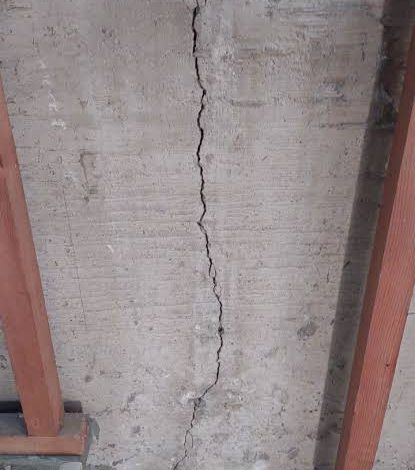
Yes — but only when the crack is the right kind. Hairline cracks, shrinkage cracks, and surface cracks in a driveway, patio, sidewalk, or garage slab are often fair DIY work if the slab is stable and the crack stays dry. Wider than about 1/4 inch? Or showing vertical displacement? Or keeping the same bad habits after patching? Stop treating it like a seal-and-forget repair and consult a concrete repair professional, or a structural engineer if foundation movement is involved.
Travis County and Williamson County get moisture swings, and that matters more than the crack itself. Central Texas clay swells when wet and shrinks when dry, so a crack that looks cosmetic in January can be wider by late summer. Water can be blocked. Movement cannot.
A good DIY repair is usually cosmetic and preventive. It can help with hairline cracks under 1/8 inch, but I would still consult a professional if the crack is near a foundation edge or seems to be changing. It can also help with:
- dry, non-moving cracks in slabs that are otherwise level
- small gaps where water intrusion is the main concern
- garage floors, patios, and short sidewalk runs
A professional repair is the better call when:
- the crack is active or getting longer
- one side is higher than the other
- the slab has sunk, heaved, or broken in multiple places
- water enters the crack after rain
- the crack runs through a structural area near a foundation edge, column, or load-bearing wall
If the concrete is part of a foundation system, I’d treat the decision more carefully and, if needed, ask a structural engineer before sealing anything. Better safe than sorry.
What does crack sealing cost in Austin?
For a typical Austin-area home, DIY materials can run roughly $20 to $100 for a small repair, depending on the product and how much prep is needed. A professional repair often starts in the low hundreds and can climb into the high hundreds or more if the crack is active, leaking, or part of a larger slab issue. Final price depends on crack length, width, access, prep work, and whether the job needs injection, routing and sealing, mudjacking, polyurethane foam lifting, or a structural fix.
Here is a practical local cost table for the Austin metro, including Round Rock, Cedar Park, Leander, Pflugerville, Buda, and Kyle.
| Repair type | Typical use | DIY material cost | Typical pro price in Austin area |
|---|---|---|---|
| Caulk-style crack sealant | Hairline, dry surface cracks | $20–$40 | $150–$300 |
| Epoxy crack injection | Narrow structural crack that is dry and stable | Not a good DIY choice for most owners | $300–$900 |
| Polyurethane crack injection | Crack with water intrusion | Not a good DIY choice for most owners | $350–$1,000+ |
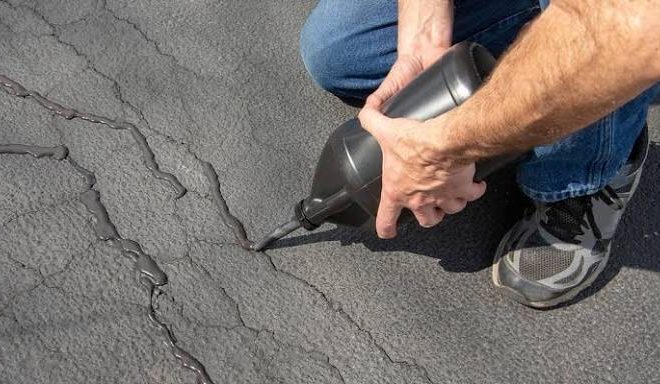
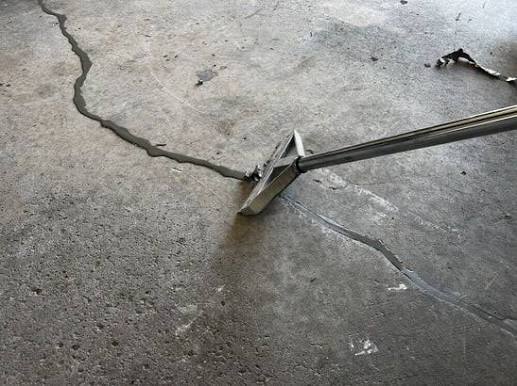
| Route-and-seal | Outdoor slab cracks needing a flexible seal | $30–$80 | $250–$700 |
| Small patch and surface repair | Chipped edges, spalls near crack | $25–$100 | $200–$600 |
| Slab lifting with foam or mudjacking | Crack caused by settlement and level change | Not a crack-only DIY job | $700–$2,500+ |
Those ranges are not a quote. They’re the kind of ballpark I would expect a local homeowner to hear after a site visit in the Austin market, where access, slab condition, and drainage can change the price fast.
What pushes the price up:
- long cracks, often more than 10 to 20 linear feet
- wet cracks or cracks that need injection resin
- poor access around fences, AC units, or dense landscaping
- failed previous repairs that must be removed
- slab movement that requires lifting before sealing
What pushes the price down:
- one short, dry crack
- clear access
- a clean slab with no broken edges
- a repair that is purely preventive, not structural
What kind of crack can I fix myself?
You can usually fix it yourself if it is narrow, dry, and stable; I would not DIY anything that looks like movement or water pressure. In Austin’s heat, a surface crack that seems harmless in spring can widen after a long dry spell, and a repair that works on a calm slab can fail after the first big rain. Classic bait-and-switch.
The cracks most suited to DIY are:
- hairline cracks under about 1/8 inch
- static shrinkage cracks in garage or patio slabs
- small crack lines that do not change season to season
- shallow surface defects where appearance matters more than structure
The cracks I would not DIY are:
- cracks wider than 1/4 inch
- cracks with one side higher than the other
- cracks that run through control joints and keep opening
- cracks with rust stains, which can signal rebar corrosion
- cracks that stay damp or pump water after rain
- cracks near the foundation of a home in Central Texas clay soil
A crack in a driveway slab in Mueller is not automatically a foundation problem, and a crack in a garage floor in Georgetown is not automatically harmless. The difference is movement. If the crack is still changing, a tube of sealant is usually the wrong answer.
How long does the repair take?
A small DIY crack seal usually takes 1 to 3 hours of actual work, plus curing time that can run from several hours to a full day depending on the product and weather. A professional crack repair typically takes 1 to 4 hours on site for a simple job, but larger repairs, lifting, or injection work can stretch across a second visit.
Austin heat can shorten working time for some sealants, while humidity after a storm can slow curing. If a product says the surface needs to be dry, I would take that seriously after a wet week in Central Texas. A contractor may schedule around a 24-hour dry window for best results. Timing gets squirrelly fast.
Typical timing looks like this:
- hairline sealant: 1 to 3 hours plus curing
- route-and-seal: 2 to 4 hours plus curing
- epoxy injection: often 1 visit for prep and injection, with cure time before use
- polyurethane injection: similar, but chosen when water intrusion matters
- slab lifting plus crack repair: often half a day or more
Need the driveway open for traffic? Ask before you book. Some products allow light foot traffic sooner than vehicle traffic, and that distinction matters on a steep Austin driveway or a tight Cedar Park turnaround.
How Austin’s clay soil and weather change the job
Austin’s expansive clay soil and seasonal moisture swings make crack sealing as much a moisture-management job as a patch job. That is why a local contractor may ask about drainage, gutters, slope, and whether the crack gets worse after dry spells or heavy rain.
Central Texas has long, hot summers, sudden downpours, and periods of drought. Those conditions create movement under slabs. If the soil shrinks away from the concrete, the slab can settle. If the soil swells after rain, the slab can heave. Sealing the crack keeps water out, but it does not stabilize the ground.
The surrounding details matter too:
- downspouts that dump beside the slab can keep a crack active
- poor grading toward the slab can feed water into the joint
- tree roots near mature oaks in older Austin neighborhoods can complicate the repair
- repeated patching without fixing drainage usually wastes money
If your property is in South Austin, the older slab and drainage patterns may be different than in newer subdivisions in Pflugerville or Hutto. A pro who works the Austin metro should talk about what is causing the crack, not just what will cover it.
For standards and product types, I would look to the manufacturer’s cure instructions and, for structural concerns, the American Concrete Institute and the Portland Cement Association. Those organizations are useful when a contractor starts talking about crack behavior, not just crack filler. If you are unsure which product fits your crack, consult a professional.
How do I choose the right contractor in Austin?
I would choose a contractor who can explain the crack’s cause, the repair method, and the limits of the fix in plain language. If the first answer is only “we can seal it today,” that is too thin for a crack that may be tied to settlement or drainage.
When you call around Austin, Round Rock, Lakeway, Bastrop, or San Marcos, ask these questions:
- Is the crack active, or is it stable?
- Will you seal it, inject it, or lift the slab first?
- What product are you using, and is it for wet or dry cracks?
- Will the repair be flexible or rigid?
- How much prep is included, such as cleaning, routing, grinding, or dust removal?
- How long before foot traffic and vehicle traffic?
You also want to know whether the contractor has experience with:
- slab cracks in expansive clay soil
- driveway settlement
- patio and sidewalk repairs
- moisture intrusion after storm runoff
- older concrete that may contain previous patch material
In Texas, contractors doing concrete work may be subject to local registration rules, and larger foundation or structural work can trigger different requirements. For anything that looks like a foundation issue, I would ask whether a structural engineer should be involved before repair starts. If your crack is in a shared wall, commercial slab, or a property with permit questions, call the City of Austin or the local building department before work begins.
Red flags: quotes that should worry you
A quote should worry you if it is vague, pushes the same fix for every crack, or ignores drainage and movement. Some repairs look neat at first and still fail after the next hot spell or rain event.
Red flags include:
- “One-size-fits-all” crack filler for every slab
- no mention of crack width, movement, or moisture
- no explanation of whether the crack is cosmetic or structural
- a price that sounds low but excludes prep, cleanup, or curing
- promises that the crack will “never come back”
- patching over a crack without cleaning out loose debris
- no discussion of nearby joints, settlement, or slab level change
A bad job often looks like this:
- sealant smeared over dirty concrete
- patch material shrinking away from the edges
- discoloration, dusting, or a visible ridge
- water still entering after the first storm
- the crack reopening within a few months
If the slab is still moving, a cosmetic patch is not a repair in the way most people mean it. It is a temporary cover.
When should I call a pro right away?
I would call a pro right away if the crack is leaking, widening, or changing the level of the slab. In Austin’s clay soil, those are the signs that the problem is not just the surface.
Call sooner if you see:
- water intrusion after rain
- one side of the crack higher than the other
- a crack wider than about 1/4 inch
- multiple cracks forming a pattern
- doors, garage frames, or walls nearby showing movement
- broken edges or spalling along the crack
For homes in areas like West Austin, Barton Hills, Georgetown, and Buda, where drainage and soil can vary a lot from lot to lot, I would not wait for the crack to “settle down.” Concrete rarely heals itself. If the ground is moving, time usually makes the fix harder.
FAQ
Can I seal a concrete crack the same day I notice it?
Yes, if the crack is clean, dry, and minor, you can often seal it the same day with a suitable DIY product. If it is wet, active, or wide, the same-day move is usually to get an inspection or quote rather than to patch it.
Does a free estimate mean the repair is simple?
No. A free estimate only means the contractor will look at it and price it. The important part is whether they explain crack movement, drainage, and the repair method, not just the number.
Is emergency crack repair a real thing?
Sometimes, yes. If water is entering a garage, patio, or slab joint during storms, a contractor may offer urgent temporary sealing or injection. In Austin after a heavy rain, the fastest fix is often a stopgap, not a permanent repair.
Can I get same-day crack sealing in Austin?
For a small, dry crack, same-day service is sometimes possible if the contractor has an opening and the slab is ready. Wet weather, curing time, and product choice can rule that out quickly.
Should I hire a pro or do it myself?
I would DIY only the simplest dry crack and hire a pro for anything that moves, leaks, or affects level. That choice saves money on minor cosmetic damage and saves you from wasting money on a slab problem that needs a real diagnosis.
If you are deciding whether to call, the line I would draw is simple: seal it yourself when the crack is small, dry, and stable; hire a pro when the crack is active, leaking, wide, or linked to Austin-area soil movement.